 To see a Video of this Presentation click here
To listen to an Audio of this Presentation click here To view this article as a PowerPoint presentation on Slideshare, with pictures, click here. Raised in Poverty Mary Slessor (1848-1915) was born, the second of seven children, into a poor and troubled home in Scotland. Although her mother was deeply religious, her father was a violent drunkard, who brought the family to abject poverty, fear and misery. Their one-roomed home had no water, lighting or toilet and hardly any furniture. Mary slept on the floor. Mary’s older brother died, leaving her as the oldest surviving child. When her father died, the burden of supporting her family fell upon her young shoulders. At 10 Mary began work as a half-timer, spending half her time at school and half her time at the mill. At 14 years Mary began working full time, a 58 hour week at the looms. However, her mother ensured that Mary went to Church every Sunday.
1 Comment
 To see a video presentation on this article, click here
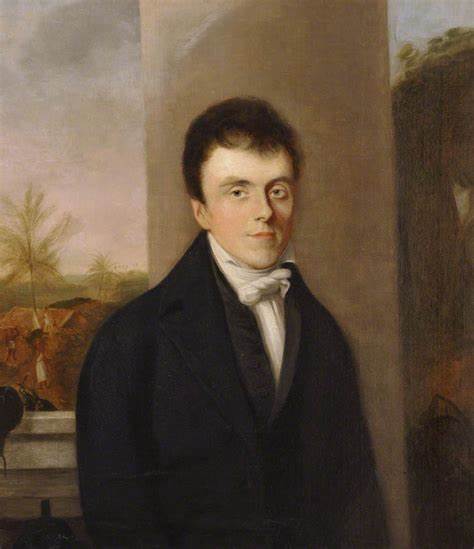
To listen to an audio presentation on this article, click here Henry Martyn was born in Truro, Cornwall, England, and he was only two years old when his mother died from tuberculosis. (His sisters followed their mother to an early grave and by the time he was 28, he was the only member of his family still surviving.) Reclusive Student Henry was a gifted student, and the ease with which he was able to learn, tempted him to avoid hard work and he gained a reputation for idleness. He was not popular and his small physique invited bullying by other boys. To protect him from bullying, the teachers placed him under the protection of another boy, who had an enduring Christian influence on his life. Conversion While studying at St. John’s College, Cambridge, Henry got into arguments and fights. On one occasion he threw a knife at a fellow student. At this time his father died and his sister began intensive intercession for her wayward brother. A lecturer and another student challenged Henry about his relationship to the Lord, and he began reading The Bible. As Henry was converted to Christ, he also achieved great success in his academic studies, but now in the light of his conversion experience, Henry observed: “I obtained my highest wishes, but was surprised to find that I had grasped a shadow.” 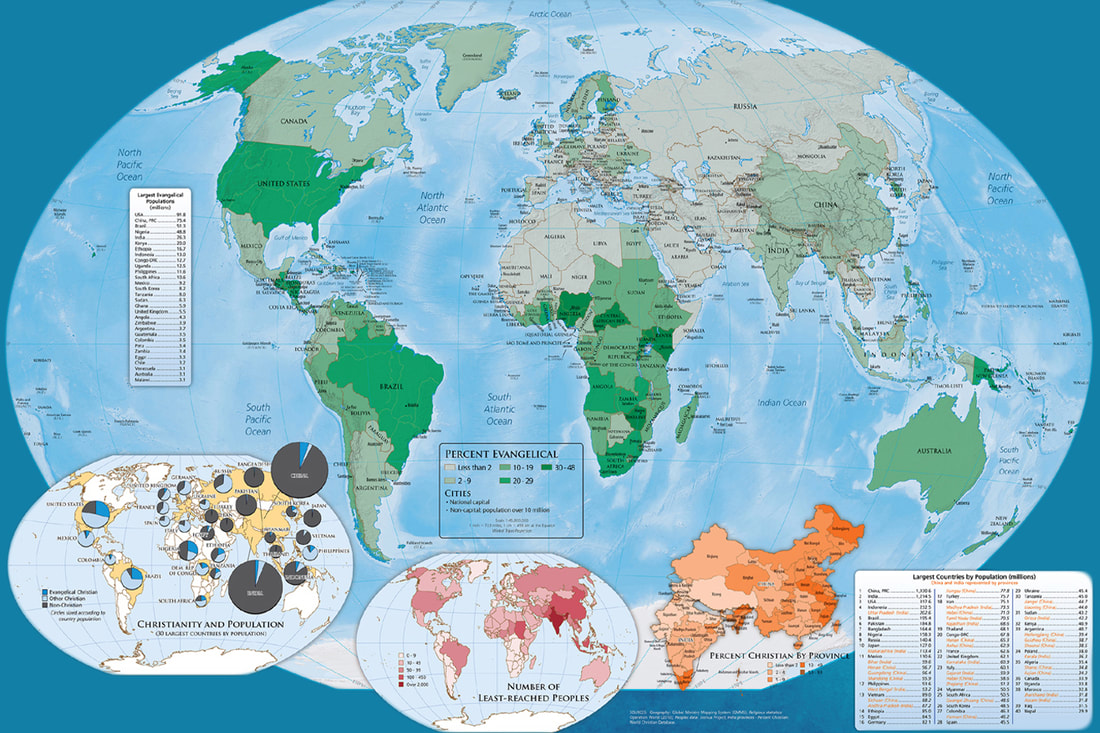 To view this article as a PowerPoint, click here.
To view the video of this presentation, click here. To listen to the audio of this message, click here. "All the ends of the world shall remember and turn to the Lord and all the families of the nations shall worship before You. For the Kingdom is the Lord's and He rules over the nations." Psalm 22:27-28 "Go therefore and make disciples of all the nations…" We are not called to make converts, or "decisions", but disciples. We are to make disciples, not only of individuals, we must start there and of families, which is vital, we are not only to disciple congregations and communities. The Great Commission commands us to make disciples of nations - all nations! “Make every effort to keep the unity of the Spirit through the bond of peace." Ephesians 4:3
To listen to an audio of this message, click here The number one reason for missionaries failing and giving up is interpersonal conflict. Interpersonal conflicts are a primary source of disruption in Christian ministries, missions and churches. Dependent Some come to the field with serious character flaws, fears and phobias, which lead to major relationship problems. There are dependent people who need constant support and direction and, rather than contribute to the team, they sap its energy. Independent On the other extreme, there are the independent people, the lone rangers, who divert the team’s energy as they yank this way and that to pursue their own agendas. 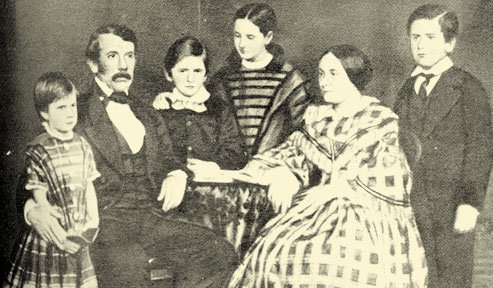 To view this article as a PowerPoint, with pictures, click here.
The Fighting Missionary The hero of the Battle of Waterloo, the Duke of Wellington, described Dr. David Livingstone as "The fighting parson." The Friend of Africa Jacob Wainwright, who had been rescued from slavery by Dr. Livingstone, described him as: "The friend of the African." Practical Christianity American journalist and explorer, Henry Morton Stanley, described Dr. Livingstone as: "A truly pious man - a man deeply imbued with real religious instincts. His religion… is of the true, practical kind, never losing a chance to manifest itself in a quiet, practical way - never demonstrative or loud. It is always at work, if not in deed, by shining example."  Have you experienced an encounter with the living God?
Has God changed your life? Do you want to be used of God to change your world? “He who is not with Me is against Me and he who does not gather with Me scatters abroad.” Matthew 12:30 Be Equipped and Empowered For over 30 years, Frontline Fellowship has been organising Biblical Worldview Summits to encourage, equip and empower Bible-believing Christians to understand the times and to know what God’s people should do (1 Chronicles 12:32).  To view this article as a PowerPoint, with pictures on Slideshare, click here.
To listen to an audio of this article Click here Adoniram and Ann Judson had the distinction of being America’s first foreign missionaries. Adoniram Judson was the son of an austere Congregational minister. Adoniram learned to read by age three. From the beginning it was clear that he was destined for an exceptional life. Conversion When he entered Brown University on Rhode Island, he became enchanted with Deism and unbelief and slipped into a restless life. After graduation he wrote for the stage in New York. Then he chose to head West for the frontier. En route, at an Inn, he listened all night to a man dying in the next room. In the morning he was shocked to learn that the deceased man was one of his closest companions at college, an outspoken unbeliever who had opposed the Gospel of Christ vehemently. Adoniram knew that Jacob Eames was lost, but he also recognised that the same was true of himself. The West lost its allure, he turned his horse around and enrolled at a Theological Seminary. He was converted to Christ there, in 1808.  To view this presentation as a PowerPoint with pictures, click here.
To view this presentation as a video, click here. To watch a video of this lecture, click here. To listen to the audio of this message, click here. "The greatest missionary is the Bible in the mother tongue. It needs no furlough and is never considered a foreigner." William Cameron Townsend. From the Battlefield to the Mission Field William Cameron Townsend was one of the most influential mission leaders in the last century. Born in California in 1896, raised in a Presbyterian Church, he was inspired to join the Student Volunteer Movement after hearing missionary John Mott speak at Occidental College in Los Angeles. In 1917, as William Townsend prepared to join the army and participate in the war, he was challenged by a missionary on furlough to make the Great Commission his priority and go to the mission field instead of the battlefield. Does God Speak My Language? He departed for Guatemala, August 1917, with a Bible Association that sold Spanish Bibles in the field. He had almost completed his first year of service in Guatemala when one of the Kaqchikel Indians approached his table, looked at the Spanish Bible and asked "If your God is so smart, why doesn’t He speak my language?" Cameron was shocked to learn that although this man lived in Guatemala, he was one of the 200,000 Kaqchikel people who spoke no Spanish. The cutting comment of this Indian so troubled Cameron, that he dedicated the next 13 years of his life to translating the Bible into their language.  To view this presentation as a PowerPoint with pictures, click here.
To view this presentation as a video, click here. To listen to the audio of this message, click here Stepping Stones to Success Some years ago, George and Alec Gallup undertook an exhaustive investigation as to what makes some people more successful than others. Using the polling techniques that have made them famous, the brothers researched and wrote a book on Success. One of their conclusions: Successful people read. Foundations for Constructive Conversation George Gallup found that reading was essential because it "makes a person ready to converse… these people have a broad knowledge… and more information with which to make evaluations and decisions." Gym for the Mind Reading is to the mind what exercise is to the body. Books are minds alive on the shelves. By taking up one of these books and opening it, we can hear the voices of people far away in time and space. By reading we can hear great people of long ago speaking to us, mind to mind, heart to heart. 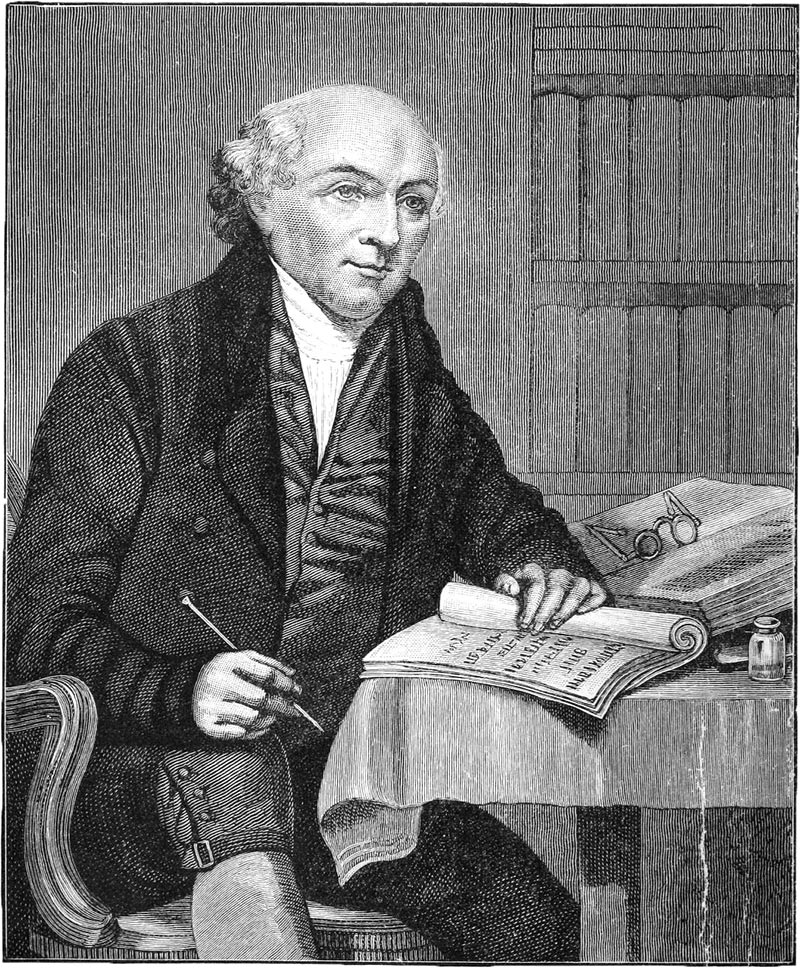 To view the PowerPoint presentation of this article, with pictures, click here.
To view the video of this article Click Here. To Listen to the audio of this article Click here. It is impossible! It cannot be done! Do not be ridiculous – what difference can one person make?” Have you ever encountered these reactions? Anyone who embarks on a challenging enterprise – especially those determined to end legal abortions, eradicate pornography, establish a Christian school or Christian Teacher Training College, stop the ongoing slave trade in Sudan, work for national Reformation and Revival or evangelize a Muslim nation – will encounter those people who seem to believe that they have “the gift of criticism” and “a ministry of discouragement!” |
More Articles
All
Archives
December 2022
|
 RSS Feed
"And Jesus came and spoke to them, saying, “All authority has been given to Me in heaven and on earth.
Go therefore and make disciples of all the nations, baptizing them in the name of the Father and of the Son and of the Holy Spirit,
teaching them to observe all things that I have commanded you; and lo, I am with you always, even to the end of the age.” Amen.” Matthew 28: 18-20
Go therefore and make disciples of all the nations, baptizing them in the name of the Father and of the Son and of the Holy Spirit,
teaching them to observe all things that I have commanded you; and lo, I am with you always, even to the end of the age.” Amen.” Matthew 28: 18-20

|
P.O.Box 74 Newlands 7725
Cape Town South Africa |
|