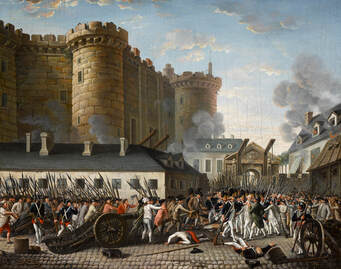
 14 July is celebrated in France as Bastille Day. It commemorates the storming of the Bastille and the launch of The French Revolution.
This article can be viewed as a PowerPoint on SlideShare. To hear the audio lecture on The French Revolution, click here. To view the video Presentation, click here Watch: Understanding Revolution and Revolutionaries A Time of Turmoil The French Revolution was one of the most influential events of modern history. The ten-year period from 1789 to 1799 when France went from a Monarchy to a Republic, to a Reign of Terror, to Dictatorship was one of the most tumultuous times in European history. Myth and Reality Much myth and romantic legend has been written on what some politicians would like the French Revolution to have been, but the reality was that the French Revolution was a monstrous horror. In the name of "liberty, equality, fraternity or death!" over 40,000 people lost their heads to the guillotine, 300,000 people were publicly executed by firing squads, drownings and other methods of mass murder and ultimately many millions died in the 25 years of war and upheavals that resulted.
0 Comments
Versailles - The Poisonous Spirit of VengeanceBy Dr. Peter Hammond 
“Injustice, arrogance, displayed in the hour of triumph will never be forgotten or forgiven.” – Lloyd George, 1919 “Those three all-powerful, all-ignorant men… sitting there carving continents with only a child to lead them.” – Arthur Balfour German Victories on the Eastern and Southern Fronts After defeating the Italians at Caporetto and the defeat of Romania and Russia, in early 1918, a million German soldiers had been released to join their comrades on the Western Front for the last great German offensive of the war. Western Offensive By April 1918, Ludendorff’s armies were back on the Marne River and Field Marshal Sir Douglas Haig was issuing his order: “With our backs to the wall… each of us must fight on to the end… Every position must be held to the last man: there must be no retirement.” America Upsets the Balance of Power in Europe In the end, the Americans proved decisive. By spring 1918,300,000 American soldiers were in France; by summer, 1,000,000. With fresh American soldiers moving into the front lines at 250,000 a month, German morale sank. Peace Overtures On October 5, 1918, Prince Max of Baden sounded out President Wilson on a peace based on the Fourteen Points he had laid out in January. Three days later, Wilson asked Prince Max if Germany would accept the points. On October 12, Prince Max gave assurances that his object in “entering into discussions would be only to agree upon practical details for the application” of the Fourteen Points to a treaty of peace. 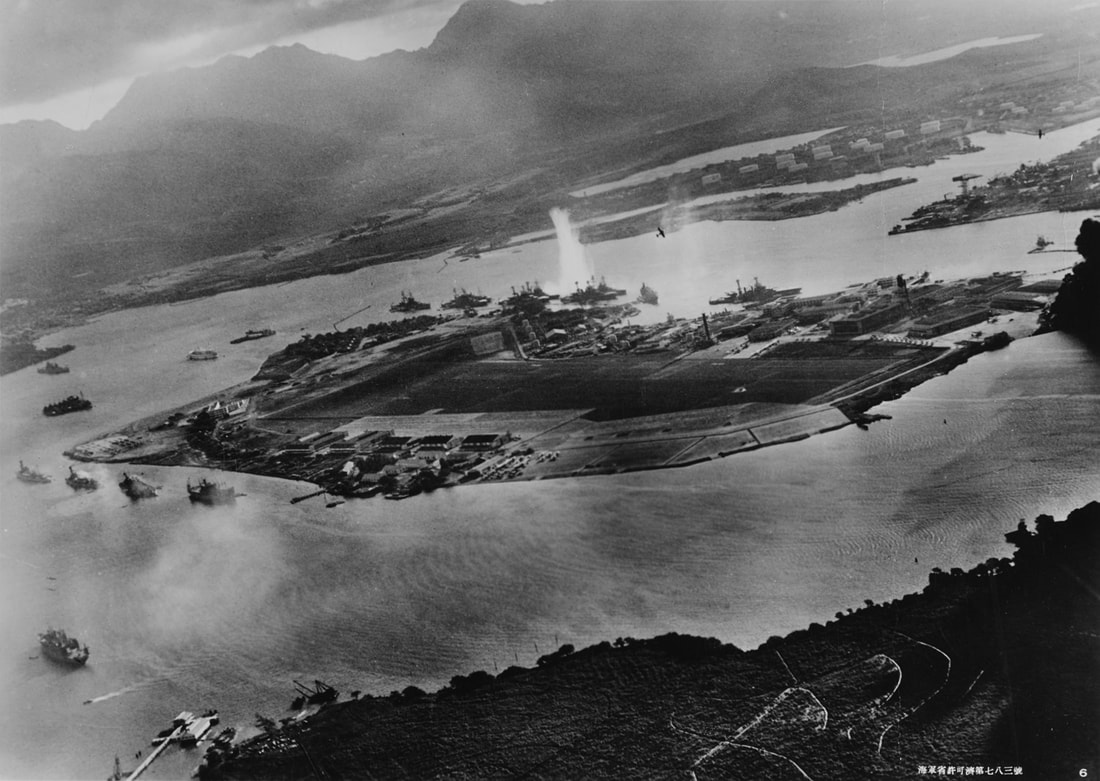 To view the video of this presentation, click here.
To view the sermon capture video, click here. To view the Power Point presentation, click here. To listen to the audio of this lecture, click here. As my history teacher, Mr Rees-Davies, MP, in Rhodesia cautioned us: “Beware the victor’s version of history!” The story of what led up to the Japanese attack on the US Navy at Pearl Harbour is both fascinating and surprising. Battle of Taranto On the night of 11 to 12 November 1940, British Naval forces under Admiral Andrew Cunningham, including Aircraft Carrier HMS Illustrious, launched Fairey Swordfish biplane torpedo bombers in the Mediterranean Sea to attack the Regia Marina Battle Fleet at anchor in the harbour of Taranto. Despite the shallow depth of the water, the aerial torpedoes proved devastatingly effective, crippling the Italian Navy, which lost half of its capital ships in one night. Naval Air Power The Royal Navy raid on Taranto Bay marked the ascendency of air power over sea power. The Fleet Air Arm proved to be the Navy's most devastating weapon. 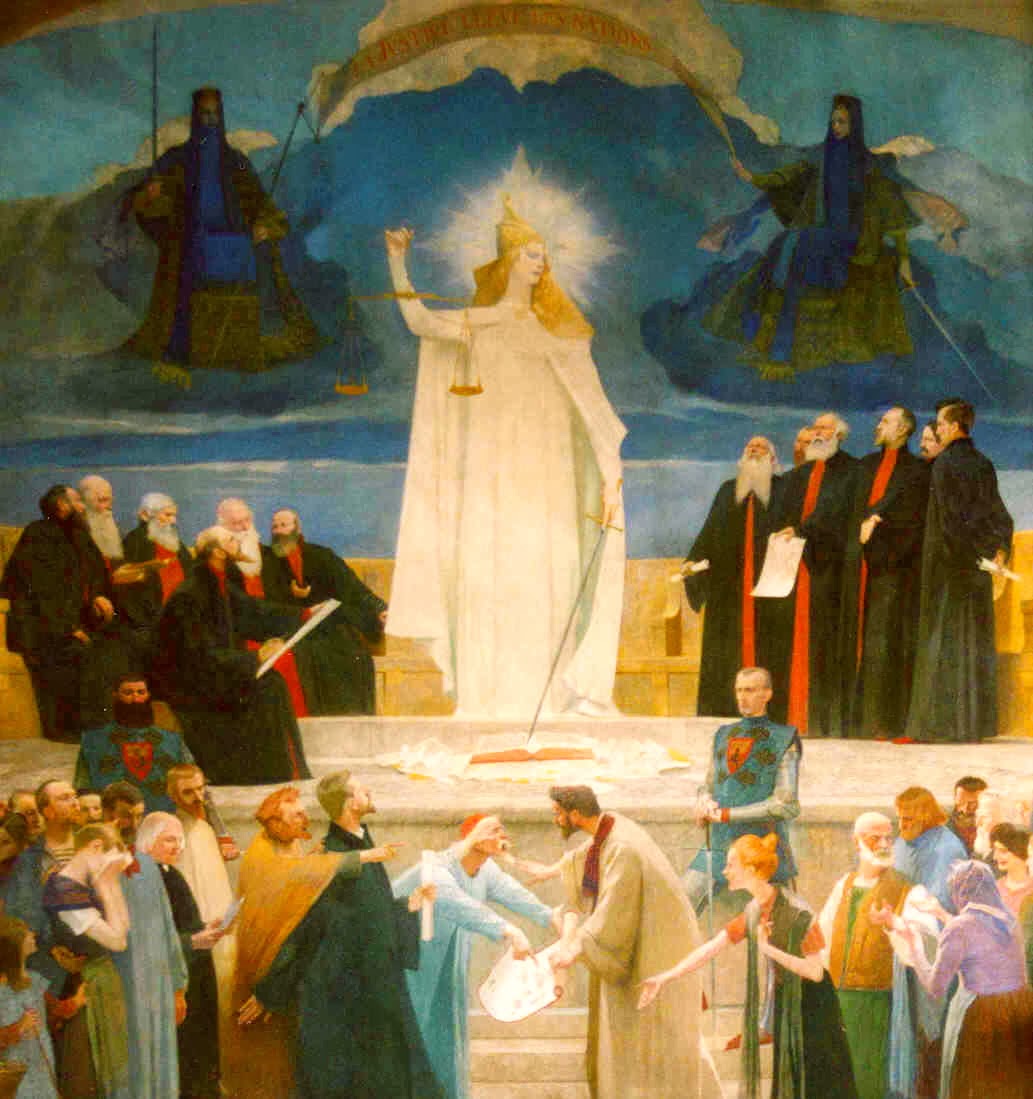 To view a video of this presentation, click here.
To view a PowerPoint presentation of this article, click here. To listen to the audio of this presentation, click here. To view this article as a tract, click here. Despite anti-Christian prejudices, it is to the teachings and example of Jesus Christ that women owe most of their freedoms. The advent of Christianity raised the dignity, freedom and rights of women to levels never before known in any other culture or religion. Indeed, as one historian put it: “The birth of Jesus was the turning point in the history of women.” As a result of the teachings and example of Jesus Christ, women in much of the world today, especially in the West, enjoy far more privileges and rights than at any other time in history. Women in the Middle East By way of contrast, one only needs look at how women are treated in those countries where Christianity has had little influence, for example in the Muslim Middle East. Christian women have been publicly stripped and flogged in Sudan for failing to wear the Islamic Abaya (a black garment that covers the head, face and the entire body). Under the Taliban in Afghanistan women were forbidden to go to school, to work outside the home, or even to walk without their whole face and head being covered under the Abaya. Women have been arrested and jailed in Iran for wearing lipstick. In Saudi Arabia, it is illegal for women to drive a motor vehicle.  9 November, marks the 30th Anniversary of the Fall of the Berlin Wall in 1989.
To view The Rise and Fall of the Berlin Wall on Vimeo, click here. To listen to the audio lecture of The Rise and Fall of the Berlin Wall, click here. A speech at Westminster College, Fulton, Missouri, 5 March 1946, declared, “An Iron Curtain has descended across the continent”. From Stettin in the North to Trieste in the South barbed wire and barricades, walls and machine gun towers were going up, sealing off the captive nations occupied by the Soviet Union from their neighbours in the West. The Iron Curtain divided a continent and trapped hundreds of millions of people under communism. Soviet dictator, Joseph Stalin, declared that the Second World War was not a disaster but “a great opportunity” to extend communism into the very heart of Europe. 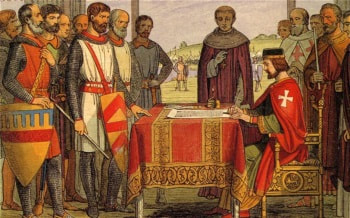 The First Bill of Rights
To view this as a video, click here. To view this as a PowerPoint, click here. To listen to the audio, click here. "…I will make you a great nation; I will bless you and make your name great; and you shall be a blessing…and in you all the families of the earth shall be blessed.'" Genesis 12:1-3 Most Valuable 15 June marks the 804th anniversary of the proclamation of Magna Carta. Magna Carta has been one of the most valuable exports of Great Britain to the rest of the world. Magna Carta has truly blessed all the families of the earth. Magna Carta was the first Statute, the first written restriction on the powers of government.  Excellence in Engineering
Even secular architects and engineers have to admit that the greatest examples of excellence in architecture are the cathedrals. Extraordinary Sacrifice and Dedication When you consider the limited technological resources available to architects, builders and craftsmen, who built the medieval cathedrals - with wooden scaffolding, hand tools and boats that transported the stones from quarries to the building sites, each of these cathedrals represent staggering sacrifices and amazing achievements. Awesome Architecture Many of the great cathedrals of Britain were built a thousand years ago! These cathedrals are far more than monuments to a vibrant and living Faith. They have been meeting places for generations of Christian communities, the focal point of Christian work and witness throughout the Middle Ages to the present day. 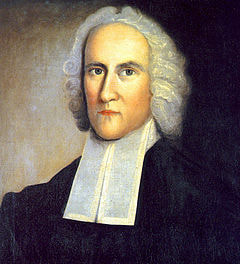 America's Greatest Theologian
Jonathan Edward (1703-1758) played a leading role in The Great Evangelical Awakening (1735-1744) and in defending the Reformed Faith against the attacks of Deists and Arminians. Jonathan Edwards has been recognised, even by secular historians, as one of the most original thinkers, and influential intellectuals in the history of New England and of American theology. He has also been described as: "America's greatest theologian." Certainly the writings of Jonathan Edwards have attracted more attention and study in England, Europe, and further afield, than any other American theologian over the last two and a half centuries. 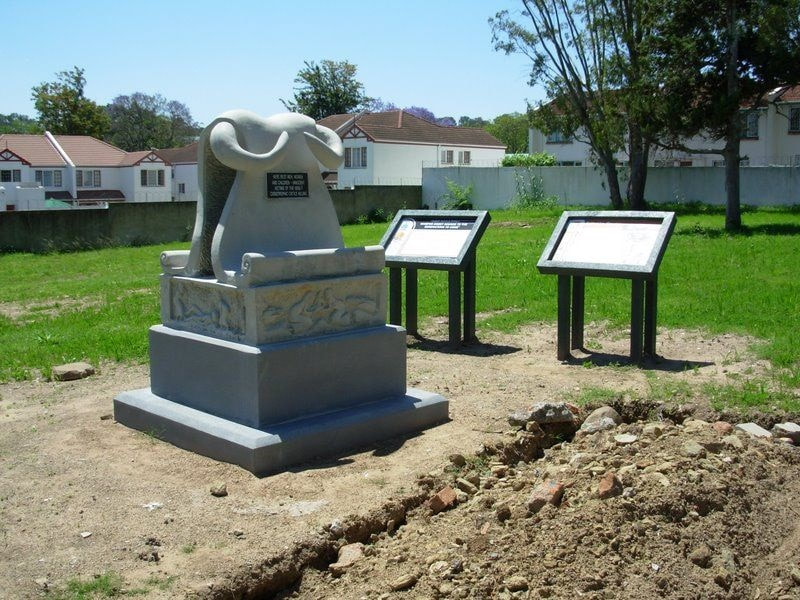 To listen to a Lecture on this article click HERE
To watch a video on this article click HERE To view a PDF of this Article click HERE "There is a way that seems right to a man, but its end is the way of death." Proverbs 14:12 Economic Suicide The “cattle killing” national suicide of the Xhosa in 1856 in Transkei, now the Eastern Cape of South Africa, was one of history's strangest socio-economic disasters. Within twelve months the population of Xhosaland plummeted by 80%, mostly through starvation. This bizarre episode was initiated by the niece of a witchdoctor. Through mass hysteria the Xhosa convinced themselves of the need to kill all their cattle, destroy all their food and sow no crops for the future. It was economic suicide and it led to mass starvation. 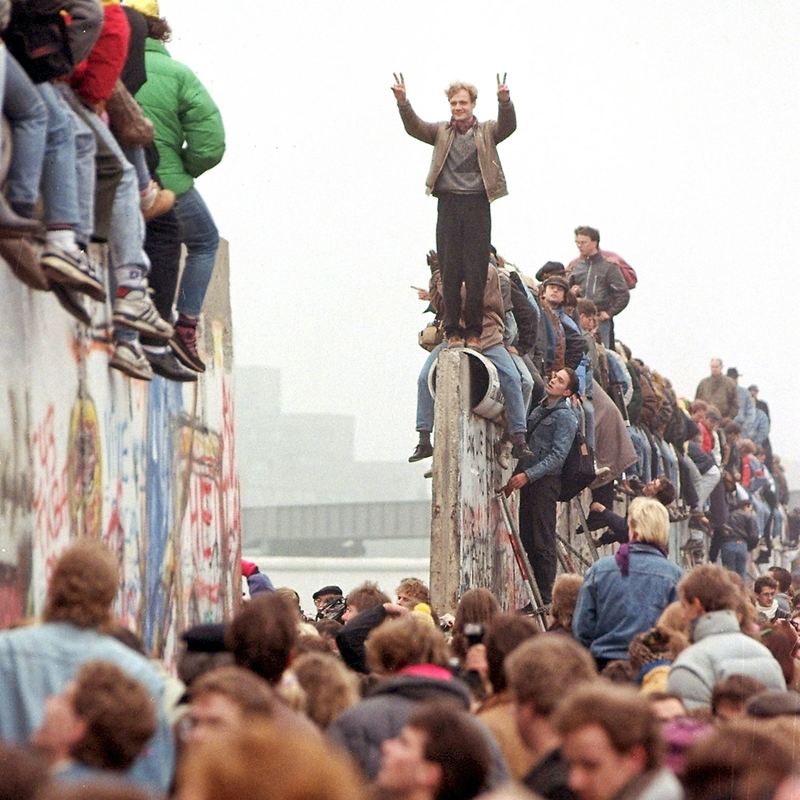 1989 was a momentous year. Across the world, from Trafalgar to Tiananmen Square, voices long repressed began to be heard. Unrest became pandemic. Nation after nation began to shake off the shackles that had bound them and assert their human rights and religious freedom. Those were heady days.
Bible Smuggling Decades of Bible smuggling and Gospel radio broadcasts, behind the Iron Curtain, had supported the tenacious persecuted Christians who were winning their neighbours and even some of their persecutors, to Christ. |
More Articles
All
Archives
July 2024
|
 RSS Feed
"And Jesus came and spoke to them, saying, “All authority has been given to Me in heaven and on earth.
Go therefore and make disciples of all the nations, baptizing them in the name of the Father and of the Son and of the Holy Spirit,
teaching them to observe all things that I have commanded you; and lo, I am with you always, even to the end of the age.” Amen.” Matthew 28: 18-20
Go therefore and make disciples of all the nations, baptizing them in the name of the Father and of the Son and of the Holy Spirit,
teaching them to observe all things that I have commanded you; and lo, I am with you always, even to the end of the age.” Amen.” Matthew 28: 18-20

|
P.O.Box 74 Newlands 7725
Cape Town South Africa |
|